

Source: Official WeChat Account: Vbdata.cn
In the field of life science instruments, "technological bottlenecks" and "import substitution" have long been industry focal points. However, as domestic substitution deepens, competition within the industry intensifies, and the localization of manufacturing by European and American manufacturers, coupled with rising non-technical barriers, makes it difficult for domestic instruments to even get a "seat at the table."
"Think Different" is Apple's innovation philosophy, and it applies equally to the life science instrument industry. The key to competition lies not in being "better," but in being "different"—independent innovation is the core driving force for breaking through barriers and rewriting industry rules. Chinese companies must not only move beyond the limitations of "import substitution" but also shape a new pattern of global competition with disruptive technologies, evolving from world-class competitors to contributors of global innovation.
Founded in August 2023, Sinboda Biotechnology (Zhejiang) Co., Ltd. (hereinafter referred to as "Sinboda") is precisely such a life science instrument R&D enterprise driven by disruptive innovation. Founded by a team of Cambridge Ph.Ds and Zhejiang University PIs, Sinboda completed tens of millions of RMB in financing in December 2023, and officially launched its landing project and assembled its team in March 2024.
In less than one year, Sinboda has achieved a full-process breakthrough from technological R&D to market implementation, completed the construction of three core technology platforms, and launched two life science instruments with world-class innovation: the Single-Cell Micro-Nano Manipulation System ScimaX and the Single-Molecule Conformation Immunoassay System SimdaX. Clinically, these are respectively used for non-invasive prenatal diagnosis using fetal nucleated red blood cells and early blood-based detection of Alzheimer's and Parkinson's diseases, marking the first step in reshaping the industry landscape.

Sinboda
01
The Intelligent Manipulator for the Microscopic World
Cell manipulation is central to life science research, yet existing technologies still face numerous challenges in high-precision sorting, cell injection, and gene editing delivery.
While flow cytometry offers high-throughput screening capabilities, it struggles to meet the demands for non-destructive extraction and high-precision screening of rare cells. Manual microinjection relies heavily on operator expertise, resulting in low efficiency and significant cell loss. Although electroporation is widely used for gene editing, it suffers from high randomness, high damage rates, and extremely low homologous recombination efficiency (1/10⁵). Furthermore, traditional techniques have limitations in accommodating both adherent and suspension cells, and lack automated and high-throughput solutions.
Sinboda introduces the disruptively innovative Single-Cell Micro-Nano Manipulation Platform ScimaX, which breaks through the limitations of traditional cell manipulation technologies. It integrates three core technologies—independently developed high-end optical imaging systems, AI algorithms, and dual-arm robotic manipulators—and is compatible with both adherent and suspension cells, ushering in a new era of AI-driven cell injection and sorting.
ScimaX combines high-content imaging with AI image algorithms to precisely identify and analyze target cells. With nanoscale-precision dual-arm robotic manipulators and AI intelligent control algorithms, it enables non-destructive and highly efficient single-cell manipulation with just a mouse click, integrating precise injection and sorting in one seamless process. The platform is equipped with a self-developed optical imaging module that supports high-resolution and multi-channel configurations to meet various experimental requirements. Compared to traditional flow cytometry sorting, manual microinjection, and electroporation, ScimaX offers an intelligent, mechanized cell manipulation solution, delivering revolutionary breakthroughs in gene editing, cell therapy, rare cell research, and beyond, while advancing precision medicine and life science development.
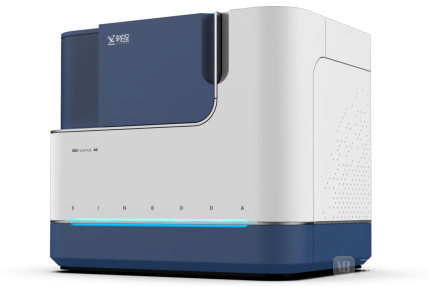
ScimaX
02
From Cell Micro-Manipulation to Fetal Nucleated Red Blood Cell Extraction:
Sinboda Leads the Next Generation of Non-Invasive Prenatal Diagnosis
Leveraging its Fetal Nucleated Red Blood Cell (FNRBC) extraction technology, Sinboda has innovatively achieved true non-invasive diagnostic-level screening. This technology overcomes the challenges of FNRBC extraction by integrating an efficient enrichment solution into the single-cell micro-nano manipulation platform. With just 5 mL of maternal peripheral blood, it can precisely and efficiently isolate extremely rare FNRBCs, covering the full testing cycle from 5 weeks of gestation to late pregnancy.
Compared to traditional NIPT (Non-Invasive Prenatal Testing using cell-free fetal DNA), FNRBC-based prenatal testing offers higher accuracy and a broader detection range. Traditional NIPT relies on placental-derived fragmented fetal cell-free DNA, which cannot provide complete genetic information and is subject to placental mosaicism, posing risks of false positives or false negatives. In contrast, FNRBC testing directly isolates the fetus's own cells, which carry the complete genome, enabling precise detection of chromosomal abnormalities, microdeletions, and microduplications. It avoids placental mosaicism errors, achieves accuracy approaching that of amniocentesis, while eliminating the miscarriage risk associated with amniocentesis.
Sinboda has established a comprehensive FNRBC non-invasive prenatal diagnosis solution, covering the FNRBC screening technology platform and the full product chain development including FNRBC enrichment, identification, amplification, and library preparation kits, filling the technological gap between non-invasive screening and diagnosis. This project has collaborated with academician teams and multiple maternal and child health hospitals, and has been selected for the National Health Commission's key R&D program, propelling non-invasive prenatal diagnosis into a new era of precision.
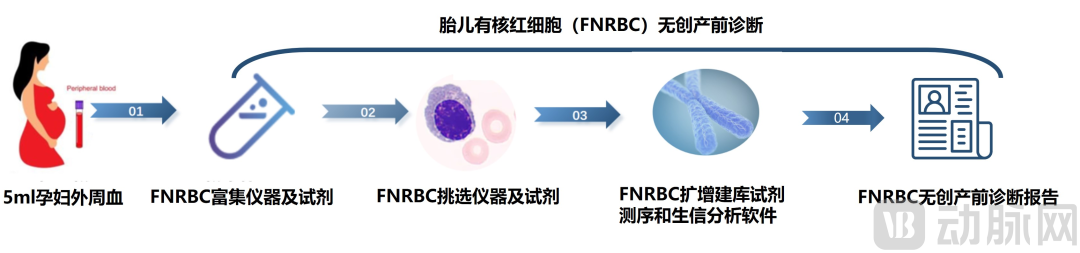
03
From Concentration to Conformation:
Sinbada Ushers in a New Era of Protein Morphological Immunoassay
Sinboda has pioneered the global launch of SimdaX 100, an immunoassay in-vitro diagnostic platform based on single-molecule imaging technology. Breaking through the limitations of traditional immunoassays that only detect protein concentration, it is the first to achieve combined characterization of protein concentration and morphological information, providing a completely new technological pathway for the diagnosis and research of complex diseases such as neurodegenerative disorders and cancer.
Protein aggregation levels (e.g., α-synuclein, tau protein, P53 protein) are critical indicators of disease progression. Taking Parkinson's disease as an example, Sinboda's large-scale clinical studies found that measuring α-synuclein concentration alone cannot distinguish patients from healthy individuals, while analysis of its aggregation characteristics can accurately determine pathological progression and differentiate patients with precision. Traditional immunoassays (chemiluminescence, ELISA, Simoa) only measure protein concentration and cannot characterize protein conformation, limiting their application in early screening and precise diagnosis of complex diseases. Sinboda's SimdaX 100 breaks through this limitation, pioneering single-molecule imaging immunoassay combined with morphological information capture, offering a new perspective on the correlation between protein aggregation and disease.
Sinboda's single-molecule conformation technology represents a systematic innovation, encompassing a series of technological breakthroughs in imaging resolution, autofocus, experimental workflows, reaction systems, consumables, and AI analysis. It successfully achieves ultra-high resolution with a single fluorescent molecule as the minimum detection unit, attaining femtogram-level sensitivity, enabling visual observation of protein aggregation levels, and precisely distinguishing monomers from aggregates. Applicable to diverse sample types including plasma, serum, and cerebrospinal fluid, it is used for early screening, therapeutic efficacy assessment, drug development, and biomarker discovery in Parkinson's disease, Alzheimer's disease, cancer, and beyond. This innovative technology provides a new tool for precision medicine in immunoassays, guiding in-vitro diagnostics toward a more precise future.
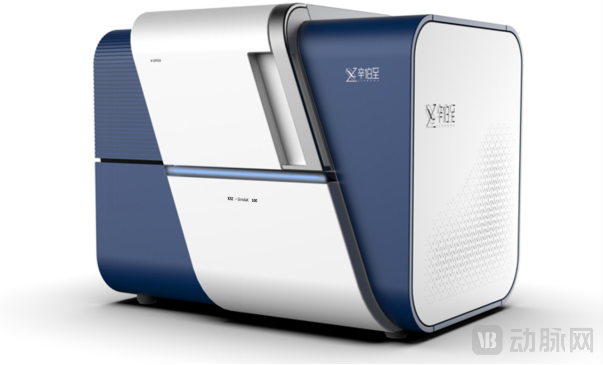
SimdaX
04
The Innovative Team and Core Competitiveness:
Sinboda's Path to Interdisciplinary Breakthroughs
"Those who can bring breakthrough change to an industry are never imitators, but innovators." This is the belief of Sinboda's founder, Dr. Xiaohua Chen. As a Cambridge Ph.D. in Economics, Dr. Chen's background is not in life sciences, but economics cultivated her unique logical thinking and "beginning with the end in mind" approach. After returning to China to teach at Zhejiang University, she keenly recognized the development potential of life science technology platforms and health applications. She found common ground with Cambridge alumnus Dr. Bing Li and Zhejiang University colleague Professor Liangjing Yang, and together they established Sinboda Biotechnology, upholding the core philosophy of "using technological innovation to address unmet clinical and health needs."
Sinboda's Chief Technology Officer, Dr. Bing Li, holds a Ph.D. in Chemistry from the University of Cambridge and served as a researcher at Cambridge. He studied under Professor Sir David Klenerman, inventor of next-generation gene sequencing technology, focusing on the application of single-molecule imaging in neurodegenerative diseases, laying a solid foundation for Sinboda's single-molecule conformation technology. During his collaborative research with Oxford University on tumor T-cell studies, he developed an in-situ rare cell manipulation instrument, which laid the cornerstone for the birth of Sinboda's single-cell micro-nano manipulation technology. Dr. Li's interdisciplinary background in chemistry, biology, pathology, and instrument development enables him to precisely grasp research needs and translate them into efficient and practical technological solutions.
Sinboda's Chief Scientist, Professor Liangjing Yang, is currently a PI at Zhejiang University and previously a researcher at MIT, specializing in biomedical robotics automation algorithms and image processing technologies. Professor Yang's research covers endoscopic 3D reconstruction, composite ablation robots for liver tumors, and vision-guided micromanipulation platforms, advancing the frontiers of microscopic image processing and high-precision automated manipulation. He has applied his deep expertise in this field to the development of Sinboda's core technology platforms, significantly enhancing the company's world-class capabilities in algorithmic technology.
The interdisciplinary founding team has laid a solid foundation for Sinboda's development. In addition, the company has built core competitiveness in two key areas—
First, Sinboda has built an open innovation system that attracts top clinical experts and research scientists to collaborate closely, tightly integrating foundational technological innovation with clinical needs. Using real-world demands as the starting point for R&D, it drives systematic breakthroughs in technology application and implementation.
Second, Sinboda possesses strong engineering and productization capabilities, having assembled a team of engineers with over a decade of industry experience. Without pre-existing templates, they have successfully overcome a series of challenges in instrument and reagent development, translating technological innovations into commercially viable products with maximum efficiency.
05
Sinboda's Global Force
Since returning to China and establishing operations in March 2024, in less than one year, Sinboda has successfully developed and launched two life science technology platforms with world-class innovation—the Single-Cell Micro-Nano Manipulation Platform and the Single-Molecule Conformation Immunoassay Platform. In collaboration with Sinopharm Group, it achieved its first domestic sale while simultaneously expanding into international markets.
The team has also completed large-scale clinical studies for the FNRBC prenatal diagnosis project and the Parkinson's disease project, along with full-process product development. Over the next two years, it will complete the comprehensive clinical promotion of FNRBC-based non-invasive prenatal diagnosis and neurodegenerative disease screening and diagnosis, establishing a new benchmark for global life science technology platforms and solutions.
Sinboda is committed to continuously providing "never-before-seen" technology platforms and solutions to the global life science community. By launching new breakthrough products annually, it aims to lead industry development and build brand competitiveness. The two existing clinical projects represent Sinboda's first growth curve, with enormous market potential. In the future, it will also leverage its platform technology advantages to explore new applications in gene editing and cancer screening and diagnosis. Building upon its technology and application platforms, Sinboda will construct a data platform to drive AI algorithm development and precision medicine advancement, creating a complete closed loop of technology, clinical health, and data.
With strong technological export capabilities, Sinboda will accelerate its global strategic layout and propel its technologies into international markets, particularly achieving reverse technology export to developed countries. By deeply cultivating global markets, Sinboda will not only bring cutting-edge technologies to the international life science field but also, through cross-border collaboration and applications, drive global technological innovation and the advancement of health.
如果您想对接文章中提到的项目,或您的项目想被动脉网报道,或者发布融资新闻,请与我们联系;也可加入动脉网行业社群,结交更多志同道合的好友。


近
期
推
荐